If you’ve ever paused while typing “unauthorised” or “unauthorized,” you’re not alone. This keyword is commonly searched because people aren’t sure which spelling is correct.
The confusion comes from differences between British and American English. Both versions look righ but only one may be correct depending on your audience.
Writers, students, and professionals often face this issue in emails, reports, and online content. Using the wrong spelling can make your writing seem inconsistent or less professional. That’s why it matters.
This article clears up the confusion. You’ll learn the difference, where each spelling comes from, and when to use each one. By the end, you’ll feel confident choosing the right word every time.
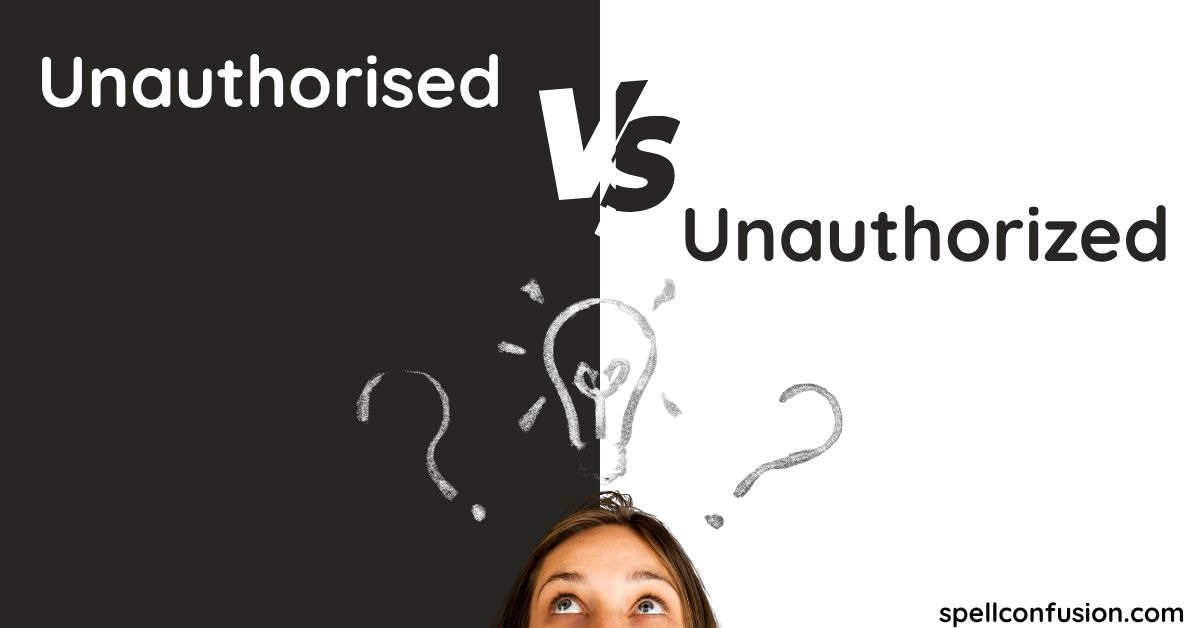
Unauthorised or Unauthorized – Quick Answer
Both “unauthorised” and “unauthorized” mean the same thing:
👉 Something done without permission.
The only difference is spelling:
- Unauthorised → British English
- Unauthorized → American English
Examples:
- UK: “Unauthorised access is not allowed.”
- US: “Unauthorized access is prohibited.”
The Origin of Unauthorised or Unauthorized
The word comes from “authorize”, which means to give permission.
- Root word: author (from Latin auctor, meaning creator or leader)
- Over time, English added endings like -ise and -ize
British English often uses -ise, while American English prefers -ize. This is why we see two versions of the same word today.
British English vs American English Spelling
English spelling varies by region. The biggest difference here is -ise vs -ize.
Key Differences:
- British English → often uses -ise
- American English → always uses -ize
Examples:
- Authorise (UK) vs Authorize (US)
- Realise (UK) vs Realize (US)
- Organise (UK) vs Organize (US)
Comparison Table:
| Meaning | British English | American English |
| Without permission | Unauthorised | Unauthorized |
| Give permission | Authorise | Authorize |
| Make real | Realise | Realize |
Which Spelling Should You Use?
It depends on your audience:
- Writing for the US → Use Unauthorized
- Writing for the UK or Commonwealth → Use Unauthorised
- Writing for global audiences → Choose one style and stay consistent
Tip:
If you’re unsure, check your company style guide or the platform you’re writing for.
Common Mistakes with Unauthorised or Unauthorized
Here are some common errors:
❌ Mixing both spellings in one document
✔️ Stick to one style only
❌ Using British spelling for a US audience
✔️ Match your audience
❌ Confusing meaning with spelling
✔️ Both words mean the same thing
❌ Writing “unauthorisedd” or “unauthorisede”
✔️ Check spelling carefully
Unauthorised or Unauthorized in Everyday Examples
Emails:
- “This is an unauthorised transaction.” (UK)
- “This is an unauthorized charge.” (US)
News:
- “Police reported unauthorised entry into the building.”
- “Unauthorized access triggered an alarm.”
Social Media:
- “My account had unauthorized activity!”
Formal Writing:
- “Any unauthorised use of this material is prohibited.”
Unauthorised or Unauthorized – Google Trends & Usage Data
Search data shows clear patterns:
- United States → “Unauthorized” is dominant
- United Kingdom, Australia, India → “Unauthorised” is common
- Global searches → Both are used, but “unauthorized” appears more due to US influence
In business, tech, and legal writing, “unauthorized” is often more widely recognized worldwide.
Keyword Comparison Table
| Feature | Unauthorised | Unauthorized |
| Region | UK, Commonwealth | USA |
| Spelling Style | -ise | -ize |
| Meaning | Same | Same |
| Usage Frequency | Regional | Global dominance |
| Formal Acceptance | Yes | Yes |
FAQs
1. Is “unauthorised” incorrect?
No. It is correct in British English.
2. Is “unauthorized” wrong in the UK?
Not wrong, but less preferred.
3. Do both words mean the same thing?
Yes. They both mean “without permission.”
4. Which spelling is more common globally?
“Unauthorized” is more widely used.
5. Should I use one spelling in all writing?
Yes. Stay consistent within a document.
6. Why are there two spellings?
Because of differences between British and American English.
7. What about formal documents?
Use the spelling that matches your audience or style guide.
Conclusion
The choice between “unauthorised” and “unauthorized” is simple once you understand the difference. Both words mean exactly the same thing, and neither is wrong. The key is knowing your audience.
If you are writing for a US audience, “unauthorized” is the correct choice. If your audience is in the UK or other Commonwealth countries, “unauthorised” fits better.
Consistency is the most important rule. Switching between both spellings in one document can confuse readers and make your writing look unprofessional. Always choose one style and stick with it.
In global writing, especially online, “unauthorized” is often the safer option because it is more widely recognized. Still, context matters.
By following these simple rules, you can avoid mistakes and write with confidence every time.